Friday, September 21, 2012

Subtle Messages of Architecture and Art

Disclaimer: Will add pictures at a later date

Professor Kathy told us that one of the objectives of this course is to develop our ability to read into architecture and artifacts of the past.

---
Archaeology

We did an archaeology study in the House of Dragons, a heritage medieval house preserved in Cluny.

An archaeologist conducts his digs in the house. Pictured above is the different layer of floors as the dig goes further down. The lowest layer is the oldest layer of the floor dating back to about 800AD. As the centuries past, the house was built over the older layer. The top most layer dates back to the 1700s.

The house was probably inhabited by a well-to-do family because of the beautiful windows. The windows were a sign of wealth in the past. The house was three stories high. The ground floor was used as a shop, most likely a blacksmithing shop. The second floor housed the kitchen and families. The families most likely stayed in a single room. The house was connected to its neighbor by a common door arch which is presently sealed. I can see a strong sense of community lifestyle based on the architecture of the house, albeit it disappears as time goes by (as shown by the sealed door arch to the neighbor’s house).

As we were analyzing the architecture of houses around the Macon region, we found that some houses had portions of rocks that seemed out of place (different color or texture from the rest of the building). The rocks looked exactly like the ones from the remains of the Abbey, which suggests that the villagers took part of the rocks of the Abbey for the construction of their houses.

---
Analyzing a Church Mural

We visited the Berze-la-Ville chapel where the Abbot of Cluny would visit to obtain his peace and solitude. Here, a painting of “Christ the Magnificent” can be found in the walls of the chapel. The exact same painting was found in the walls of the Cluny Abbey as well.

The Byzantine-style painting, pictured above (accidentally snapped before I actually realized that photography was not permitted), pictured Christ in his glory. The eleven apostles and St Paul were on his sides with another four unidentified individuals – probably important members of the Catholic Church. Six holy maidens were painted on the pillars. There were also two scenes of martyrdom by a saint from the West and a saint from Asia Minor. The bottom walls also portrayed six saints – both from the West and the East. 

Dr Reinert concurred that the painting tried to appeal to a wider audience who may come from different nationalities by portraying individuals representing different regions. The painting attempts to give Cluny a form of legitimacy in the eyes of individuals from all over the world who are well versed in their Christian teachings and history.

---
Musings on Stone Carvings

Back to the Cluny Abbey, if you look at the stone carvings, you will notice that they look totally different from Renaissance stone carvings. They seem more rudimentary, lacking the details and dimension of the ones from the Renaissance era. To put it simply, they seem like a drawing from a 10 year old child.


These were beasts that were unfamiliar from western cultures (as far as I know). Typically, stone carvings in the West usually feature mythical creatures from the Bible, Greek/Roman mythology, Norse mythology, or even Egyptian mythology. But these creatures pictured here (and many others that were not pictured due to time constraint) did not seem like any from those sources. It made me wonder: could these creatures are mythical creatures from some mythology of a local tribe?


---
Moral of the story: Take in every detail that you see.


Memorable Quotes

"Trivia question. If Kathy were to be back in the Byzantine era, she would be a Queen. Why is that?" (Dr Reinert, pointing to Professor Kathy's red shoes)

- Wei Jie Tan

Ideals, Passion, and Ethics

In this trip, I've met a stellar individual, who is young and passionate in what she does.

We went to the Domaine Perraud winery, which belongs to Sonia and her husband. Sonia’s husband came from a family of vineyard owners. He decided to create their own wine because it is a better way to showcase the quality of grapes that they grow because selling them to a bigger wine production company may not fully showcase the flavor of their grapes.

At Domaine Perraud winery, Sonia was talking proudly about terroir. About how the wine produced represents their soil. She also spoke about the quality vs quantity debate, where it all lies down to ethics.

Do we compromise quality for money sake? I know how angry I get when I see smaller food portion in my favorite restaurants each time there's a price hike. Why not they just increase the food price but retain the portion? #$%^!

*cool down, cool down*

I like Sonia's passion. If all entrepreneurs were like that, the world would be a better place. But you know what made me happy? The fact that idealistic, and driven individuals exist. Especially when they are young.

I am inspired.

---
On the same day, we went to a goat farm. The goats were SOOOOOOOOOOOOO CUUUUUUUUUUUUUUUUUUTTTTTTTTTEEEEEEEEEEEEE! (sorry, just had to do that)

The farm was owned by a middle aged couple. The goat cheese that they made was top notched! It was like nothing that I've ever tasted before! The "goat smell" which I loathed was not so significant. I loved the cheese! I wished we weren't so full so that we could grab more.


Their method of cheese making was primarily passed from one generation to the next. However, they mentioned that they may be the last generation of their family to make the Maconnais goat cheese because their children had no wish to continue their trade.

It is heartbreaking to watch a culture so beautiful and unique to slowly fade away because of disinterest. It was the exact opposite of Sonia's case.

I am sad.

---
Amidst everything, I feel that the world still has hope. If we would just work on our ideals, passion, and ethics.

Lets.

Cheers to the people of my generation.

- Wei Jie Tan

Terroir: Of Land and Food

You know how each language has words that has absolutely no equivalent in another language? Like in Malay language, you have manja (intense cuteness + intense sweetness) and dengki (intense hatred with absolute zero sympathy).

In French, we have the word terroir.

Translated literally, terroir means soil. However, terroir encompasses much more than that. It also includes weather, climate, geography, and land. To the French, all their food reflects the terroir of the production. Because of that, the French really value where their food comes from. Just go to the restaurant, and you'll see that the veggies, meat, cheese, and wine are mostly local. In fact, there's so much pride taken in that.

At least the French outside of Paris that is...

The French definitely inspired me to support the "support local produce movement" (although I find it hard to give up my tomatoes this winter).

- Wei Jie Tan

All About the Brothers

Mention the word "monk" and two images come up into my mind. One is a Shaolin kungfu master with intense discipline. The other is a man of prayer. Here, we studied about two groups of monks that descended from the Benedictine order: the Cluniacs and the Cistercians.

Again, I'll reiterate that the Benedictine order is all about work and prayer. The Cluniacs only did prayer, while the Cistercians did prayer AND work.

The Lazy Cluniacs

The Cluniacs led a luxurious and exclusive lifestyle. They populated the glorious Cluny Abbey. When the first Abbey wasn't big enough, they constructed (or I should say listed people to construct) a bigger Abbey. And that's how we get Cluny I, Cluny II, and Cluny III.

Their lives were rather antisocial. No talking for the rest of the day. Their vocal cords were only restricted to singing. Of course, I'm sure this rule only applies to the younger and less powerful monks. Someone has to give them orders, right? Someone (the abbot) has to be talking to the Kings to influence their power, right?

We visited the Cluny museum and entered the Clocher de l’Eau-Benite, which is that significant leftover building from the past glory. The building was tall. Imagine many towers of that size piled up together. During the day, the sole light source would illuminate the building from the top, and Gregorian chants would reverberate throughout the halls.

My not-so-professional conclusion: As the number of monks increases, they want to build a larger hall so that their singing will sound louder. Does it give the songs more "oomph" when it reaches Heaven? I don't know. But the Brothers seem to think so.

Other lifestyle details of the Cluniacs: It seemed like the monks had a social hierarchy of their own within the Abbey. Each monk had his own separate task, and only a few of the more powerful clergy could actually read. Because they had no printers back then, some of the monks were tasked to manually copy the manuscripts by hand. But you know, you don't really have to know how to read when you copy manuscripts. If you don't know how to read, all the better. See less, know less. That's how the powerful establish control over their subordinates.

For a huge abbey constructed by the townspeople, there wasn't direct access for them to enter the Abbey. Its all about waiting and bureaucracy (history and present day don't really differ much). There were specific sites in the abbey that were designated for waiting. Like all tourist attractions, there were upper limits to how many people who can wait in there.

In the abbey, there were many buildings within the Abbey designated to store food.

So why did people chose to be monks? It probably was a socially high-ranking position. The exclusivity must have made them somewhat elitist. The promotion to Abbot was probably the most powerful position available to a non-aristocrat. Constant access to delicious and high quality food. Easy job and no manual labor. Easy merits (via praise and worship) to enter Heaven. The only downside was no reproduction, but hey, who's to know about that?

Speaking about the Abbot. The Abbot has a HUGE mansion all to himself. It had many rooms, book collections, and art stuff.

Unsurprisingly, Cluny declined later on because of poor leadership and financial issues.


The Hardworking Cistercians

To reiterate, the Cistercians were the hardworking brothers that couldn't stand the lazy lifestyle of the Cluniacs. They believed that work was equally important in gaining merits to going to Heaven.

They worked on many things. Just to list the few that we saw in this trip: grape growing, wine-making, dairy, cheese-making, salt mines construction, building constructions. It was to a point that everywhere we go, we see a Cistercian heritage. Literally! In Cluny, in Macon region, in Beaune, and all the way to Jura!

Cistercians. are. everywhere.

It was they who developed the wine-making and cheese-making industry. And it was this development that partially contributed to the development of Europe into the powerful force from Renaissance onwards.

And there we have it, an influence of the Church that does not involve meddling into political affairs, starting Holy Wars and condemning people to the stake. In contrast, it was the humble lifestyle of the Cistercians that changed the landscape of Europe.

For that, I really admire and respect the Cistercian monks.


Memorable quotes:

"Do you think the Abbot keeps mistress in his mansion? Why does he need so many rooms?" (Me to Louisa in the Abbot's house)

- Wei Jie Tan

Once upon a time, Cluny was...

...Glorious.

But now, its simple, peaceful, and quiet. Lets talk about Cluny's history:


Cluny’s history is intricately linked to the Cluny Abbey, which was founded in 910 AD by the Benedictine monks. The Benedictine monks led a reclusive life and chose a location that is far away from most of the main cities and well hidden by hills for the building of the Abbey. Cluny began to grow and prosper as the Abbot of Cluny grew in political power. Cluny derived much of its wealth through the pilgrimage of believers because Cluny claimed to have possessed relics of the saints.
Cluny’s prosperity led to the “lazy” and luxurious lifestyle of the Cluniac monks. They spent most of their days in prayer and left the daily work to the villagers of Cluny. The lifestyle of the Cluniacs was luxurious as compared to the laypeople of their time. Another group of Benedictine monks known as the Cistercians did not agree with the lifestyle of the Cluniacs that strayed away from the Benedictine order. The Benedictine order required their monks to live a life of solitude, work and prayer – the Cluniacs did not include work in their daily lives. Thus, the Cistercians chose to distance themselves from the Abbey.
Cluny began to decline in power and wealth starting from the 12th century because of poor management and the expensive construction of the third Abbey. In the 16th century, Cluny was sacked by the Huguenots which led to the loss of manuscripts in the library. During the end of the 18th century, the French Revolution led to a revolt against the rich and the powerful. It had toppled the French monarchy. Cluny was not spared from the French Revolution. The Abbey was destroyed and the stones were used for the construction of other buildings such as the stud farm in Cluny under the administration of Napoleon Bonaparte. 

Today, only a few buildings remain from the old Monastery.


I just realized what history and microbes have in common. Both of them are there, but they can't be seen.

Memorable quotes:
"If we were to count the number of milk of the virgins, we would have a sea of milk" (Dr Reinert, on relics)
"Who knows how many foreskin of Christ are there? The point is that they are profitable." (Dr Reinert, on relics)
 

Medieval Europe is REAL!


Growing up as a child, I play role-playing games over video consoles. They usually feature medieval Europe setting. You know, the stone villages, stone pavements, the metal armor, lush plains, mountains, oak pine forests, horses, cathedrals, castles, kings and queens, taverns and "wenches", etc.
And part of those were exactly the first things that I noticed when I reached Macon station.
MEDIEVAL EUROPE IS REAL!
The surroundings were lush green. The area was mountainous, and it was mostly plains. It looked as though as it came from a scene from "Game of Thrones".
Then you get those cows lazily grazing on the grass. Passed by a random castle by the mountains.
And then we reached Cluny, where everything is made out of stones.
STONES! Houses were made from rocks. The roads were paved with rocks. The cathedral was all old rocks. Again, my mind was going "GAME OF THRONES!".
And there you go! Here you have an Asian kid whose only exposure of medieval Europe is from wikipedia, games, anime, and mangas realizing that those images are real after all.

Fantasy has got to come from reality, right?
 

Obrigada

September 11, 2012


The journey throughout Rio has taught me both about the city and also about myself. This experience is one that I will never forget. To have experienced the landscapes, the growth of urbanism, and different settlements of social groups, different styles of architecture influenced by the overall culture, and most importantly how the country is moving forward in terms of sustainability and green infrastructure is an eye opening experience to any individual traveling to South America for the first time. To have the ability to emerge myself in a distinct growing culture, has opened doors to endless opportunities.There's something about traveling to a new country that you learn more than what you would've learn through  text books, presentations or movies.

 First and for most, the stigmas and stereotypes. For safety regulations, most of the friends, teachers and families that I talked to prior to leaving for this trip, were half excited and half worried for my friend and I. Though, I am thankful and appreciative of their concerns, I was excited that this trip would be conducted by two individuals, rather than an entire group. The toughest task was our 0 knowledge of Portuguese. Little did I know I would return to the states, falling in love with a language, a culture, and the country. Having the background in Spanish helped so much, and picking up the language in a matter of weeks felt so gratifying. Being able to connect with the people rather than experience the country itself, behind a glass, or within a bubble, was my major concern and a big goal, that my colleague and I definitely achieved on this trip. Not only from our experience but also from other individuals who we met traveling. Speaking with the locals of the area not only taught us about the differences in culture, but they also inform you about some of the realities, social issues and most importantly about the history of their city. Not only, have I learned to maintain persistent and perseverance but to also maintain an open mind about the differences types of cultures.
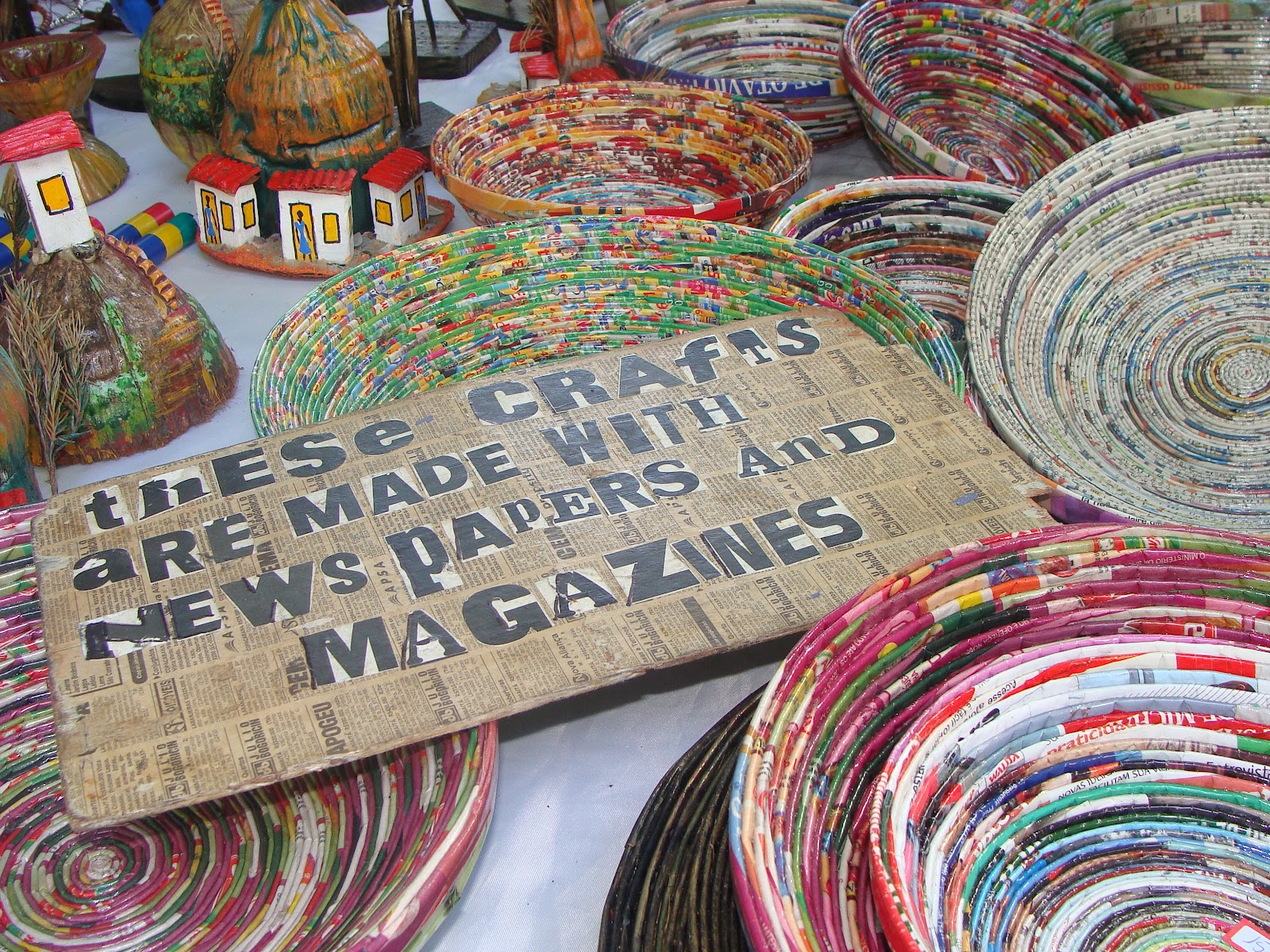
Brasil itself is a very diverse country, with so much potential and opportunities, it is worth going out there to reach out to new opportunities. This country has really affected my education, and has inspired me to expand in my field of work to focus on sustainable architecture and designs. Rio is growing in sustainable education, at market squares, most souvenirs will be from recycled products. However on the other hand, it still deals with a lot of other issues within the different favelas. Due to their disconnection with proper trash collection along with other important services, their drinking water is cycled through improper piping that is wasteful and not hygienic.


I can't express my gratitude enough, to the faculty at the Landscape Architecture Department, and the SEBS International Scholarship Program for allowing this opportunity to land in my way. It has only motivated me to move forward in my education, expand my cultural awareness, and most importantly be an example to other future students who plan on traveling.

Don't miss out or presentation on Brazil: Talks October 3rd. CDL 3:55pm

Also TBD: Our exhibition will be held in November so stay posted for that event.

- Maria Torres